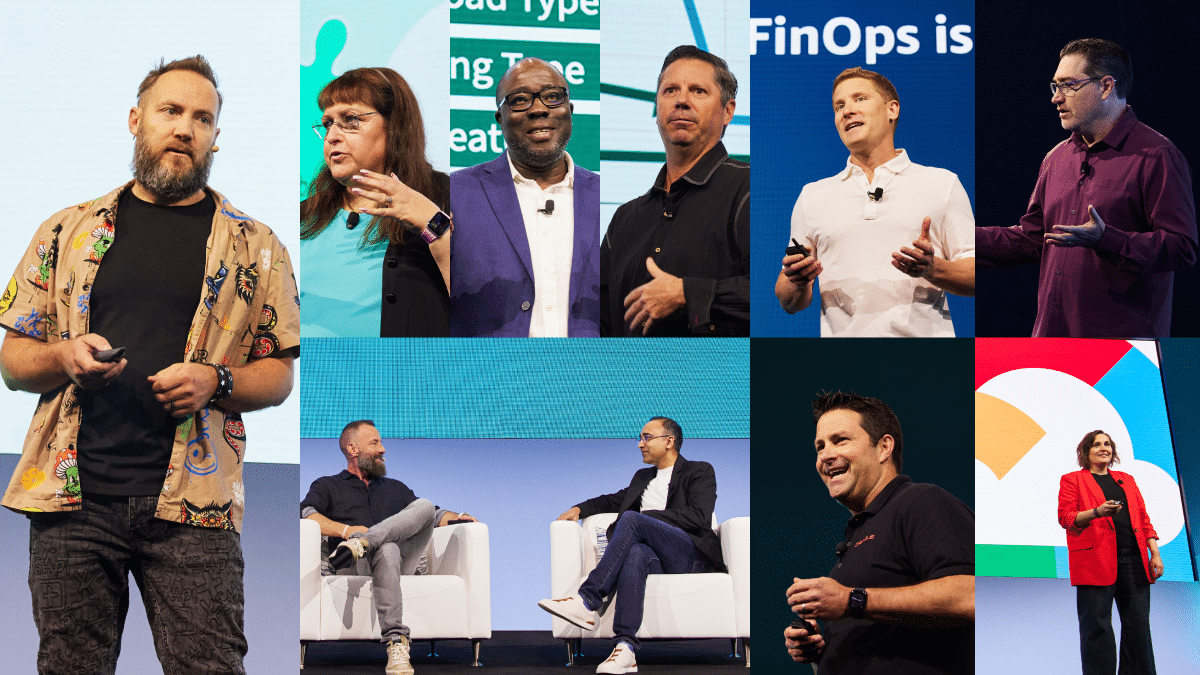
Key Insight: A new technology leader profile is reshaping how enterprises manage and deliver technology value. Interviews and analysis based on dozens of technology leaders at Fortune 100 companies reveal the emergence of a “FinOps Enabled Executive”, a strategic C-minus-one leader who has unified FinOps across cloud, SaaS, data centers, platforms, and AI spending under a single practice. These leaders are transforming FinOps from a cloud cost optimization function into a strategic infrastructure value capability that drives CEO and board-level decision-support for multi-year technology investments. The maturation is being seen first in large, complex enterprises with very large cloud spend but with a converged purview of hybrid infrastructure due to business needs.
A Lot Has Changed in the Last 18 Months
Since 2019, the FinOps Foundation community has focused primarily on building effective FinOps teams and empowering practitioners with frameworks, certifications, and best practices. The typical conversation has centered on the FinOps team lead—often a senior manager to director-level role managing a small team of practitioners working to optimize cloud costs and empower engineers.
But in the Fortune 100, a more mature practice has developed starting in 2025. A new archetype of technology leader has emerged, operating at a fundamentally different altitude. This is not simply a more senior FinOps practitioner. This is a strategic technology executive who implements FinOps principles across a comprehensive value management practice that spans the entire technology portfolio and integrates directly into C-suite decision-making, using FinOps as a pillar alongside technology efficiency and developer productivity domains.
Through interviews with senior technology leaders at companies including Salesforce, JPMorgan Chase, Fidelity Investments, HSBC, Disney, Nationwide, AIG, ServiceNow, Adobe, Workday, SAP, American Express, Accenture, PWC, Kyndryl, Oracle, and others managing billions in technology spend, two consistent profiles emerged.
Executives in these organizations — typically at the VP, SVP or EVP level — have evolved FinOps beyond its cloud origins to form integrated practices encompassing cloud, data centers, SaaS platforms, licenses, and major technology investments under unified technology management and governance.
These leaders do not only do FinOps. FinOps is one of 2-3 major areas under their purview, as one Fortune 100 leader in a technology company stated: “We have found a direct correlation between engineering teams who get good at FinOps excel in every other area like security, resiliency, and developer productivity. FinOps is a key leg of the operational efficiency stool creating a carbon fiber weave supporting good behaviors in related areas”. FinOps connects technology decisions to business value and connects engineering efforts with business and revenue goals from which they are historically disconnected, and keeps them focused on business value.
From Cost Control to Strategic Business Value
Within the world’s most advanced enterprises, FinOps is not merely a cost-control function but a central nervous system carrying information about technology investments that is evolving how business value decisions are being made.
This guide describes two emerging executive archetypes, based upon direct interviews and observations from Fortune 100 companies where this trend is already firmly established. The profile defines a FinOps Enabled Executive, explores the market forces that created the role, and details the operational habits that enable these leaders to drive value at the highest levels of their organizations.
For those already in this position, this will validate and frame their strategic importance. For organizations that recognize the need to create such a role, and for the practitioners who aspire to fill it, this analysis provides a clear and actionable roadmap.
As one Fortune 100 leader in a regulated industry stated: “You need someone who is equally CTO and CFO at the same time. They must have a multi-disciplinary team, must sit across tech decisions and must be a part of technology decisions starting at the business case. FinOps must be across all infrastructure for them to balance commitments and tradeoffs. They also need software, license, asset and capacity planning intersections”.
The “Why”: Forces Driving the New Executive Mandate
To understand the rise of the FinOps Enabled Executive, one must first appreciate the market forces that necessitated this new leadership role.
Let’s briefly revisit what brought FinOps to life in early cloud environments; and how the new executive needs to deal with this imperative across an expanded set of technologies. Spending went from annual capital to on-demand opex. The buyer moved from finance to engineering. FinOps was created to work with these new buyers. Now the new leader needs to understand how to invest & return through these new buyers across more types of technology.
FinOps became not just ‘super visibility’ for cloud, it enabled a whole new protocol, data cardinality, and pace for all infrastructure which broke the old systems and required a new approach.
A convergence of profound technological and financial pressures has elevated technology spend from a departmental cloud concern to a board-level technology priority.
These are not isolated trends but interconnected forces that, together, demand a unified, strategic approach to managing the total value of technology.
- Technology Spend as a Board-Level Conversation, surpassing Labor: Technology and software costs are now rivaling, and in some cases surpassing, labor as the largest expense for many public companies. The growth of Artificial Intelligence (AI) has only accelerated this trend. Consequently, CEOs and boards of directors now require data-backed decision support for multi-billion-dollar investments, a stark shift from when cloud spend was a rounding error on the balance sheet.
- “Happily Hybrid” Expanded the Scope of FinOps: Leaders from pioneering enterprises like HSBC, American Express, Adobe, Disney and global systems integrators like Accenture, Deloitte, EY and Kyndryl consistently report that FinOps principles are now being applied across the entire technology portfolio, as most large organizations are “happily hybrid” and seek an integrated value management approach. The FinOps practice has proven too valuable to remain confined to the public cloud and now encompasses on-premise data centers, private cloud, SaaS platforms, and even mainframe environments to create a single pane of glass for technology value management.
- The Unification of Management Disciplines: We are witnessing a great convergence. FinOps is unifying with historically separate disciplines like IT Asset Management (ITAM), Software Asset Management (SAM), and working more closely with IT Financial Management (ITFM). Enterprises are combining these teams under single leaders, creating an integrated, data-driven practice that manages hardware investments, software licenses, and technology consumption in a holistic manner.
- The Imperative for Strategic Decision Support: The data and insights generated by FinOps teams are no longer focused only on tactical optimization or cost savings. Enterprises now use this decision supporting data to align executive priorities and make critical trade-off decisions between investment priorities. This includes guiding choices between cloud and on-premise hosting, rationalizing SaaS investments, and strategically managing multi-year vendor commitments to maximize value.
- Navigating the AI Frontier: Leaders are grappling with a dual challenge: applying FinOps principles to manage the explosive growth of AI/ML spend (“FinOps for AI”) and leveraging AI to automate and enhance the FinOps practice itself (“AI for FinOps”). This includes developing new metrics like cost-per-token, managing GPU utilization, and building AI assistants that write more cost-efficient code.
These powerful forces have forged a specific and identifiable leadership profile, purpose-built to navigate this new, complex landscape.
Profile: VP+ Level, Reports to CxO, owns all technology value with career path to CxO.
The FinOps Enabled Executive is a new archetype of technology leader with a strategic mandate to manage the value of a rapidly converging portfolio of technology investments. This individual has evolved beyond traditional infrastructure management to become a central figure in C-level decision-making, translating complex cost and usage data into actionable business strategy while managing complex technology vendor commitments and value realization. They are a technologist at heart, but with a sharp business and financial mind.
The following are real-world titles currently held by executives operating in this capacity:
- Chief Infrastructure Officer
- EVP – Engineering (i.e., Data, Infra, Cloud, Software, DC, FinOps, AI)
- EVP – Global Infrastructure
- SVP – Infrastructure Operations
- SVP – Product & Platform Engineering
- SVP – Global Technical Operations
- SVP – Cloud, AI & Data Platforms
- VP – Infrastructure & Analytics
- VP – Cloud Management
Based on an analysis of leaders in this role at Fortune companies, a clear profile emerges:
| Core Responsibility | Manages a converged portfolio of technology spend including a mix of public cloud, first party data centers, private cloud, hardware spend, software spend, SaaS, and data cloud platforms. |
| Seniority & Title | VP, SVP, or EVP; typically a “C-Minus One” role reporting directly to the Group CIO, CTO, or sometimes, the CFO. |
| Team Structure | Part of a central technology team, or a large business unit. The FinOps function reports into them 1-2 levels down. |
| Experience | 20-25 years in technology, with a strong engineering or infrastructure background. Tech credibility is critical for driving change. |
| Career Trajectory | This role is increasingly seen as a path to a CxO role, whether that is CIO, “IT COO”, “COO for the CTO”, or emerging titles like Chief Infrastructure Officer. FinOps leadership is seen as a strategic differentiator for executive advancement.
(** Two sub archetypes: technologist background vs engineer background – the technologist leans more toward an IT COO or “COO for the CTO” career path, the engineer leans more toward a CTO or Chief Infrastructure Officer path) |
| Company Profile | Large enterprises, typically Fortune 500 or equivalent, with over 10,000 employees and revenue over $10 billion. |
Interview with a FinOps Enabled Executive at Salesforce
Above: Nishant Gupta, EVP Engineering at Salesforce, outlines his role and how FinOps enables his enabling product and technology value and strategy.
A Tale of Two Technology Leaders’ Career Paths
Understanding who this leader is must be followed by a deeper understanding of how they operate and integrate within the enterprise to drive tangible value.
The interviews reveal two distinct archetypes with different backgrounds, team structures, and career trajectories. Both manage converged technology portfolios and drive strategic value, but they approach the role from fundamentally different origins—one rooted in deep engineering, the other in technology business operations.
Both could legitimately be called “Chief Value Officer for Technology,” though neither would likely use that title. Instead, they use titles that reflect their organizational positioning and career trajectory—infrastructure engineering leadership for the more technical path, and technology operations for the more business path.
The Engineering Leader
Where This Role Thrives: This archetype is predominantly found in large technology companies with consolidated engineering organizations—companies like Salesforce, Adobe, ServiceNow, etc. These organizations typically have:
- A unified engineering organization under one CTO or Chief Engineering Officer
- Many products and services, but one consolidated technology platform serving them all
- Engineering as a core competency and competitive differentiator
- Product development velocity as a primary success metric
In these environments, infrastructure is the foundation that enables all product teams, and the leader managing that infrastructure must have deep technical credibility with engineering leadership.
Typical Titles:
- SVP, Infrastructure & Platform Engineering
- VP, Cloud & Platform Operations
- SVP, Global Infrastructure
- Chief Infrastructure Officer
Background Profile: This leader typically has 20-25 years of hardcore engineering experience—building distributed systems, managing infrastructure at scale, and leading technical architecture decisions. They’ve progressed through IC (individual contributor) technical leadership roles like Principal Engineer or Distinguished Engineer before moving into engineering management. Their credibility comes from having built the systems they now financially manage.
Team Structure: Their organization integrates three to four pillars that form what one executive called “a carbon fiber weave supporting good behaviors”:
- FinOps – Cloud cost optimization, commitment management, and technology spend visibility
- Reliability Engineering – SRE practices, uptime, incident management, and operational excellence
- Developer Productivity – Platform engineering, tooling, CI/CD, and engineering velocity metrics
As one Fortune 100 engineering leader explained: “We have found a direct correlation between engineering teams who get good at FinOps excel in every other area like security, resiliency, and developer productivity. FinOps is a key leg of the operational efficiency stool.”
Their teams are primarily composed of engineers—platform engineers, SREs, data engineers, and infrastructure architects—with financial analysts embedded to translate technical decisions into business metrics. The financial function serves the engineering function rather than leading it.
Decision Framework: This leader optimizes for engineering excellence with financial discipline. Their conversations center on:
- “How do we architect this for both performance and cost efficiency?”
- “What’s our cost per transaction, and how does that compare to our reliability targets?”
- “Should we build or buy this platform capability?”
- “How do we trade off between the large commitments we have to multiple clouds and the datacenters we own”
Career Path: Chief Infrastructure Officer / CTO
This archetype is on a trajectory toward Chief Infrastructure Officer or CTO roles—positions focused on technical strategy, engineering excellence, and platform innovation. They will likely continue to operate in deeply technical organizations where infrastructure engineering is a core competitive advantage.
Their FinOps practice is the financial intelligence layer that makes their engineering organization provably efficient, enabling them to secure continued investment in platform excellence while demonstrating clear ROI to the business.
The Business-Technology Leader
Where This Role Thrives: This archetype is predominantly found in large, regulated industries with decentralized business units—companies in banking, insurance, healthcare, telecommunications, and energy—and reports into a Global CIO. These organizations typically have:
- Multiple business unit CIOs or IT leaders serving different lines of business
- Separated technology organizations for retail banking vs. investment banking, or life insurance vs. property & casualty
- Technology as a necessary enabler rather than the core product
- Regulatory compliance and risk management as primary constraints
Examples include JPMorgan Chase, AIG, Nationwide, Fidelity, and major healthcare companies. In these environments, a central technology operations leader is needed to create unified visibility across siloed business units and drive enterprise-wide value optimization.
Typical Titles:
- SVP Core Infrastructure and Platforms
- SVP, Technology Operations
- VP, Infrastructure & FinOps
- SVP Engineering
- SVP Cloud, AI and Data Platforms
Background Profile: This leader has technology depth but pairs it with financial acumen and cross-functional business leadership experience. They’ve often worked in technology finance, strategic sourcing, or technology program management before taking on infrastructure responsibility. Their superpower is translating between technical teams and business executives—they are, as one executive described it, “equally tech executive and CFO at the same time.”
Team Structure: As a leader at a regulated industry company articulated, this role requires “a multi-disciplinary team that must sit across tech decisions and must be a part of the business case from the start.”
Their organization integrates multiple distinct disciplines under a unified FinOps mandate:
- Infrastructure Engineers / SREs – Who understand the technical architecture and optimization opportunities
- Financial Analysts – Who model costs, forecast spend, and translate technical decisions into business impact
- Sourcing Specialists – Who manage vendor relationships, contract negotiations, and commitment optimization
This multi-disciplinary structure eliminates the traditional handoffs between separate IT, Finance, and Procurement organizations. Instead of engineers optimizing resources, then handing cost reports to finance, then waiting for procurement to negotiate—the entire value chain operates as a unified team.
The leader emphasizes: “FinOps must be across all infrastructure. SAM team integration is critical. This leader has unified IT Asset Management (ITAM), Software Asset Management (SAM), FinOps, and data center capacity planning under a single horizontal practice that is closely aligned to the Global CIO. They must have a multi-disciplinary team, must sit across tech decisions and must be a part of technology decisions starting at the business case. FinOps must be across all infrastructure for them to balance commitments and tradeoffs. They also need software, license, asset and capacity planning intersections.”
Career Path: “COO for the CTO”, “COO for Technology”, “IT COO”
When asked about career trajectory, leaders in this archetype consistently describe the path as “COO for the CTO” or “IT COO”—operational leadership roles that sit at the intersection of technology execution and business value.
One executive’s reporting structure illustrates this perfectly: reporting to an EVP who oversees “all the engineering operations, the entire way the business runs. Data centers, public cloud, AI, operations, everything.” The FinOps Enabled Executive becomes the financial intelligence layer for the entire engineering and operations function connecting infrastructure decisions to business value and executive strategy.
Choosing Your Archetype: A Decision Framework
For practitioners aspiring to this level, understanding which archetype aligns with your strengths, interests, and organizational context is critical:
Choose the Engineering Path if:
- You work in a technology company with consolidated engineering leadership
- You have deep technical credibility and want to maintain hands-on architecture influence
- You’re energized by solving complex technical problems at scale
- You want to lead organizations that build and operate platforms
- Your goal is CTO or Chief Infrastructure Officer
- You thrive in environments where engineering velocity and technical excellence are primary metrics
Choose the Business-Technology Path if:
- You work in a regulated industry or enterprise with multiple business unit CIOs
- You excel at cross-functional influence and building consensus across diverse stakeholders
- You’re energized by complex negotiations and financial modeling
- You want to be the trusted advisor to the CEO/CFO on technology value
- Your goal is IT COO or “COO for the CTO/CIO”
- You thrive in environments where business value optimization and enterprise-wide rationalization are primary mandates
The Roadmap: Building and Growing Into the Role
For FinOps practitioners aspiring to this executive level, and for organizations needing to create or formalize this role, the interviews reveal a clear progression and set of requirements.
For Individual Practitioners
Build Technical Credibility: This role is not accessible without deep technical expertise. The executives interviewed uniformly have engineering or infrastructure backgrounds and can engage credibly with architects and engineers on technical trade-offs. If you’re coming from a finance or business background, invest in technical depth. If you’re coming from engineering, develop financial and business acumen.
Master Cross-Functional Leadership: The FinOps Executive succeeds by influencing without direct authority. This requires building relationships across finance, procurement, engineering, and business leadership. Practice translating technical concepts into financial terms and financial concepts into technical terms—you’ll spend your career doing both.
Demonstrate Strategic Impact: Move beyond reporting on costs to driving business decisions. Can you quantify the business value of optimization efforts? Can you influence architecture decisions before deployment? Can you present technology spend in terms that resonate with business leaders?
Expand Your Scope Progressively: If you’re managing cloud FinOps today, demonstrate success and then expand to SaaS, then to major platforms, then to data centers. Each expansion builds the case for broader scope and higher organizational positioning.
Develop Executive Communication Skills: The altitude shift from director to executive is fundamentally about communication. Practice distilling complex technical and financial data into insights that drive decisions. Board-level communication is its own skill set—seek opportunities to present to senior leaders, and seek out mentoring from those who do this well.
For Organizations
Start with Executive Sponsorship: None of the mature practices profiled here succeeded without top-level sponsorship. The FinOps Executive needs a CIO, CTO, and/or CFO champion who understands the strategic value and protects the function from political resistance.
Position Centrally, Not in Business Units: This role must sit in a central technology organization with enterprise-wide visibility. Business unit positioning inevitably leads to conflicts of interest and prevents the cross-organizational optimization that drives the most value.
Invest in Integration, Not Just Optimization: The value comes not from optimization alone but from integrating FinOps insights into business planning, investment approval, and strategic decision-making. Build the connective tissue between FinOps and C-suite processes.
Unite Rather Than Silo: The convergence of cloud, SaaS, on-premise, and major platforms under unified FinOps governance is not just operational efficiency—it’s strategic necessity. Organizations that maintain separate ITAM, SAM, ITFM, and cloud teams miss cross-platform optimization opportunities and present fragmented views to leadership. Uniting in this context should include the teams themselves, their data, and their organizational goals. The VP role over this area often includes 2-3 related business or engineering functions.
Expect Political Resistance: Transparency about technology spend can challenge existing power structures. Some leaders will resist visibility into spending they previously controlled autonomously. The organization must be prepared to back the FinOps Executive when resistance emerges.
A Roadmap for Leadership
The FinOps Executive has emerged at the largest, most mature Fortune sized companies but is still forming in smaller mid market enterprises. For organizations and individuals looking to thrive in this new environment, the path forward is clear.
- For Organizations: It is imperative to establish this senior, cross-functional leadership role. Moving beyond siloed cost management of individual technology stacks (cloud, SaaS, on-prem) is no longer optional. To make integrated, value-based investment decisions across the entire technology portfolio, a leader with a holistic view and C-level influence is essential.
- For Aspiring Leaders: Technical expertise alone is insufficient. This executive role demands a bifurcated learning path. Engineers must develop deep financial literacy and business acumen to understand how their technical decisions impact the bottom line. Conversely, professionals from finance and procurement must gain a richer context of the underlying technology they are purchasing. Above all, this role requires mastery of strategic communication—the ability, as one executive analogized to Dale Carnegie’s work, to become more influential by translating complex data into a compelling narrative that guides executive action.
The role was forged by the strategic necessity to manage the total value of technology in an era of unprecedented complexity and expense. By integrating technology, finance, and business strategy, these leaders have become essential pilots for navigating the modern enterprise. As the landscape continues to evolve, their mandate and presence will likely expand.

Topics
-
FinOps Foundation Perspectives